This article is a book review in the Fall 2023. It is chosen for inclusion here due to its discussion of the origins and development of the so-called “New Qing History”(新清史).
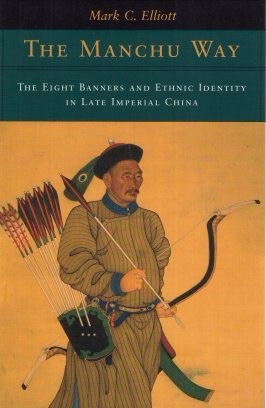
The image is from 豆瓣 book page.
Beginning with Evelyn Rawski’s Presidential Address titled Reenvisioning the Qing: The Significance of the Qing Period in Chinese History at the 1996 Annual Meeting of the Association for Asian Studies (AAS), the debate over the so-called “New Qing History”[1] (新清史) has raged on in Chinese and American historiography for nearly three decades.[2] In Rawski’s address (later published in The Journal of Asian Studies), she prominently rebutted the argument in Ping-ti Ho’s (何炳棣) 1967 article, The Significance of the Ch’ing Period in Chinese History, that Sinicization was the key to a successful Manchu rule.[3] Subsequently, in 1998, Ho posted an article defending his views on “Sinicization,” which sparked interest and discussion in the American academy about the roles of Manchus and Qing dynasty in Chinese history. Afterward, many books discussing the Qing Empire were published in the United States. Among them Evelyn Rawski’s The Last Emperors: A Social History of Qing Imperial Institutions(1998), Pamela Kyle Crossley’s A Translucent Mirror: History and Identity in Qing Imperial Ideology(1999), Edward J. M. Rhoads’ Manchus and Han: Ethnic Relations and Political Power in Late Qing and Early Republican China, 1861-1928(2000), and Mark C. Elliott’s The Manchu Way: The Eight Banners and Ethnic Identity in Late Imperial China(2001) published in close years, with a shared tendency towards Manchurian subjectivity, being customarily referred to as “Four Books of New Qing History” in the Chinese world.[4] The common feature of these four books is that they all emphasize the retention of Manchu’s own nomadic traditions and ethnic identity in Qing rule, revisioning the view in previous studies that the Sinicization of Manchu rulers is a prominent political feature in the Qing dynasty. In the past thirty years, this academic debate has become particularly heated and sensitive as it entangled in current political issues, extending from “Sinicization” to the Inner Asian nature of the Qing Empire and even to the territorial and definitional issues of the Qing Empire and “China.” On a purely academic level, these works do provide a frontier perspective to Qing studies, as well as drawing attention to multiethnic historical sources, especially those in the Manchu language.
In The Manchu Way, Elliott argues how the system of Eight Banners preserved Manchu ethnicity and how the Manchu emperors used ethnicity to consolidate a “minority rule.” The Eight Banners system, which originated from a Manchu military organization, continued after the Manchus occupied China proper to maintain military superiority while preventing the Manchus from being overly Sinicized, as they had been during the Jin Dynasty. The book’s main body describes the origin, evolution, and decline of the Eight Banners system, as well as its internal operating mechanisms and cultural connotations. Of a series of segregation systems, particularly important was the establishment of the “Manchu city,” which maintained the cohesion of the Manchu community while reinforcing their alienation as a material manifestation of the closed nature of the Eight Banners system. Ethnic identity is often associated with privilege. All Manchu Eight Banners were given military positions and duties from birth, which ensured their salaries and daily necessities, with a primary mission of military training and studying Manchu culture, particularly the Manchu language. The high percentage of militarized training and the innate security of living made most Manchus indifferent to the imperial service examinations. Moreover, the imperial service examination for Manchu banners was sometimes suspended due to war mobilization, making Manchu youths even more unmotivated to study.[5] Despite its complexity in details, the Eight Banners system generally contains restrictions and privileges for the Manchus. These institutionalized privileges and ethnic barriers have never been eliminated, no matter how much verbal emphasis is placed on ethnic equality between Manchu and Han.
In the Introduction, Elliott argues that “ethnic sovereignty” was a crucial concept for Manchu rule and that the distinction between “conquered-conquered” relationships was crucial for all Inner Asian dynasties.[6] This analytical approach is crucial for analyzing all the Inner Asian dynasties in Chinese history. It is because the Chinese civilization, with Han culture at its core, existed as a “Big Other” that invading foreign rulers were often forced to adopt austerity and conservatism in response to such cultural pressure, and the most prominent case was the Yuan Dynasty. Thus, from the sources in this book, the Manchu ethnic identity was strengthened by a series of measures after entering the pass, from an “imagined community” to an institutionalized entity known as the Eight Banners system. An outstanding feature of the Eight Banners system was that, while it originated as a military organization, its administration was designed for all aspects of Manchu life. This intense, militarized ethnic policy was feasible in the early Qing, especially when anti-Manchu forces were still influential in the south and southeast coasts of China, but as the crisis lifted, its laxity became inevitable. The Qing emperors attributed this degradation to the negative influence of Han culture, but it was really rooted in a mismatch between a transforming empire and an idle professional military group. Therefore, one of the tensions in this book is between the laxity and corruption inside the Eight Banners system and the Manchu emperor’s need for a strongly nationalistic and militarily repressive Manchu Eight Banners.
Although Elliott convincingly argues a relatively well-developed, independent, and strongly nationalized Manchu Banner system, does this solve the Manchu “minority-rule question”? I believe that the governance of the Qing Empire can be divided into two levels, one for territorial expansion and retention and one for daily operations of the imperial bureaucracy; most of the time, the eight-banner system was very successful in the former and impotent in the latter. In the Early Qing and High Qing, the superiority of the Eight Banners cavalry could prevail on the battlefields of Inner Asia, typically in the pacification of the Zhungar Rebellions. However, the empire was sustained by more than just military conquest. The administrative system of the Qing Dynasty, the system of six ministries, was inherited directly from the Ming Dynasty. In Macabe Keliher’s book The Board of Rites and the Making of Qing China, he mentions that the design of Qing ceremonial rites relied mainly on Han intellectuals, adapting and extending many Ming ritual norms.[7] In addition, given that the Manchu Eight Banners system was fundamentally a military elite system, its downward influence was minimal. Since Manchu officials usually had senior positions, down to the level of a county or village, the roots of this vast imperial system still depended on Han bureaucrats and gentries to function. This could also explain the rapid rise of localist politics in the late Qing.[8] In short, beyond the debate between “Sinicization” and “Manchuization,” technically, Manchu “minority rule” was not only based on reinforcing national identity and ethnic barriers but did require the participation of Han bureaucrats and intellectuals. Divorced from an analysis of the imperial system, a unilateral emphasis on either the Sinicization of the Manchus or the Manchuization of the Han will not be conclusive.
Over-emphasizing the conflict between “Manchu-Han” would overlook the complex multi-ethnic policies of the Qing dynasty. The surviving Qing archives contain a variety of scripts: Chinese, Manchu, Mongolian, Tibetan, and Chaghatai (Old Uyghur), and even mutual annotations, such as in Manchu for Chaghatai.[9] The functioning of the multilingual system of paperwork required many translators, known at the time as the “bi-tie-shi”(笔帖式) or “she-ren”(舌人), and many Manchu emperors themselves were proficient in several languages while encouraged the Manchus to learn Chinese and other languages. This reveals another paradox in the Qing dynasty, which is that the need to administer a vast multi-ethnic territory accelerated the fusion of interethnic cultures, while the Manchu emperors did not want this fusion to dilute the Manchu’s ethnic identity. Due to this trend of integration, a kind of pan-Chinese nationalism based on “Hua Xia” gradually took shape under the invasion of European colonizers at the end of the 19th century. However, at the same time, the dichotomy of “Manchurian-Chinese” has never been eliminated since the fall of Ming Dynasty, which is why the slogan of “anti-Manchu revolution” by Zhang Binglin was so appealing. The debate in the early 20th century over ” anti-Manchu revolution” or “five-ethnic republic” was the result of ethnic tensions within the Qing empire.
Overall, The Manchu Way succeeds in providing a complete picture of how the Eight Banners consolidated Manchu dominance as a “state within a state” system. This book succeeds in providing a perspective from the Manchus, revising the traditional paradigm geographically centered on Jiangnan and ethnically centered on the Han Chinese. At the same time, discussing the Qing Empire in the context of Asia-Europe and even global history provides a broader perspective for studying 19th-20th century modernization in China. As a result, in recent years more and more researchers have turned to borderland peoples and regions, emphasizing the use of multi-ethnic linguistic sources in research.
[1] The term “New Qing History” comes from New Qing Imperial History: The Making of inner Asian Empire at Qing Chengde, edited by Ruth W. Dunnell, Mark C. Elliott, Philippe Foret, James A Millward in 2004. It should be noted that the references to “New Qing History” in English and Chinese do not exactly coincide.
[2] Evelyn S. Rawski, “Presidential Address: Reenvisioning the Qing: The Significance of the Qing Period in Chinese History,” The Journal of Asian Studies 55, No. 4 (1996): 829-850.
[3] Ping-ti Ho, “The Significance of the Ch’ing Period in Chinese History,” The Journal of Asian studies 26, No.2 (1967): 189-195.
[4] No evidence can be found as to who first proposed the concept of the “four books of the new Qing history.” This article refers to: Liu Shanshan, “The Formation of the ‘New Qing History’ School and Its Main Points of View,”( “新清史”流派的形成及其主要观点) last modified Nov 30, 2020, http://www.qinghistory.cn/qsck/431146.shtml.
[5] Ma Zimu, “The Formation and Development of Imperial Translation Examination in the Qing Dynasty ( 1723—1850), ” The Qing History Journal, No.3(2014): 23-47.
[6] Mark C. Elliott, The Manchu Way: The Eight Banners and Ethnic Identity in Late Imperial China, (Stanford, California: Stanford University Press, 2001), 5-6.
[7] Macabe Keliher, The Board of Rites and the Making of Qing China, (Berkeley, CA: University of California Press, 2019).
[8] One problem in this book, as pointed out by Prof. Sun Weiguo of Nankai University, is insufficient coverage of the eight banners and ethnic policies after the Jiaqing reign. One possible reason for this is to avoid repetition, as Edward J. M. Rhoads’ book focuses more on the Manchus in the late nineteenth century.
[9] Li Ning, “State Translation Practices in the Xinjiang Region during the Qing Dynasty,”(清代国家翻译实践在新疆地区的体现) Minority Translators Journal 115, No.2: 16-22.
 Sijian Wang’s Academic Blog