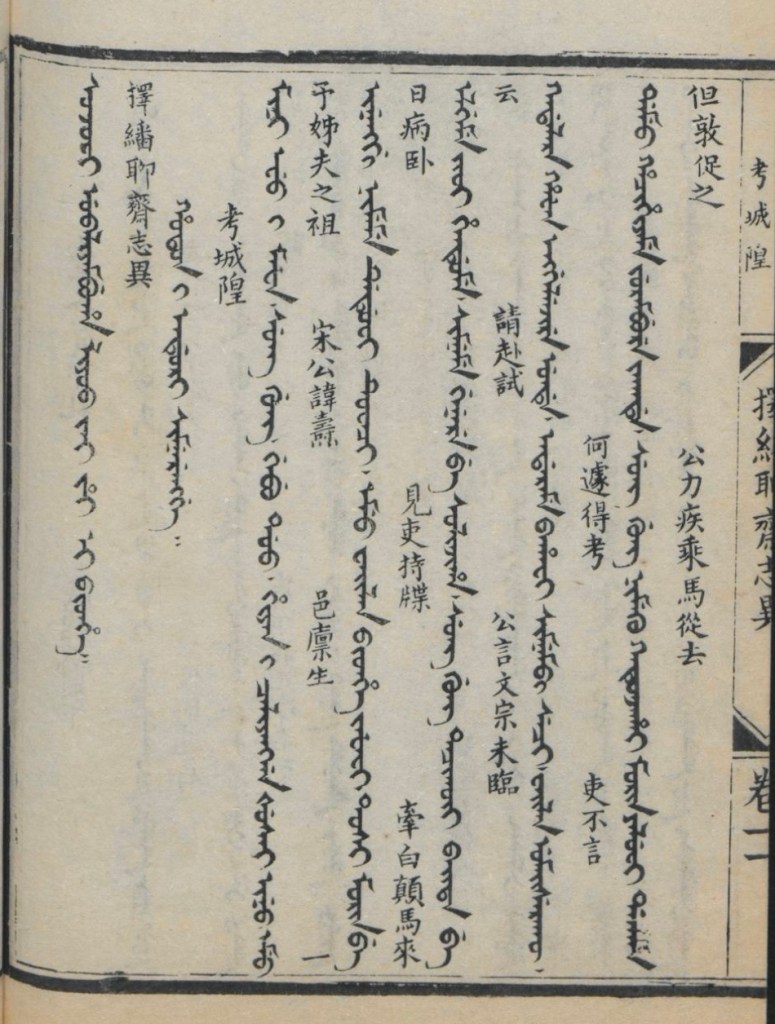
It’s well-known that one of my academic interests is researching various monsters and superstitions! Using the Manchu version of Liaozhai Zhiyi 聊斋志异 to learn Manchu might indeed make the process more enjoyable! 👹
Note: This version does not include the preface. This is purely for practicing Manchu, not for serious academic research. If there are any errors or doubts, I welcome my friends’ criticisms and corrections.
Still updating irregularly. 😋
At this pace, it feels like it could reach 1,000 issues.
Source of the Version: https://manc.hu/en/tools/reader/text/124051/liyoo%20jai%20jy%20i%20bithe#ubaliyambi](https://manc.hu/en/tools/reader/text/124051/liyoo%20jai%20jy%20i%20bithe#ubaliyambi This website supports the download of original texts from ancient books in facsimile editions.
Chinese Liaozhai Zhiyi Version: This version is held by the Library of Congress in the United States.
Main Dictionaries: https://buleku.org/home
Xibe Script Transcription: https://abkai.net/zh/online-keyboard/online-keyboard-manchu/](https://abkai.net/zh/online-keyboard/online-keyboard-manchu/
Line 1-3
Line 1
- The ᠰᠣᠨᠵᠣᡶᡳ of the original text seems to lack “n”?
- ᡠᠪᠠᠯᡳᠶᠠᠮᠪᡠᡥᠠ ubaliyambi – ubaliyambuha (Verb passive perfect past tense) Originally, it referred to the physical action of “turning over,” but here it is borrowed to mean “translation.” In other words, the following article has been translated into Manchu.
- Liaozhai Zhiyi《聊斋志异》The title “聊斋志异” is transliterated as “liyoo jai jy i” in Manchu. Interestingly, in Manchu, “liyoo” originally means “fodder” or “forage,” and “jai” means “second” or “next.” Although it may be a coincidence, these Manchu words, in their original meanings, actually somewhat align with the image of the author, Pu Songling 蒲松龄, gathering ghost stories in rustic cottages and roadside huts.
Line 2
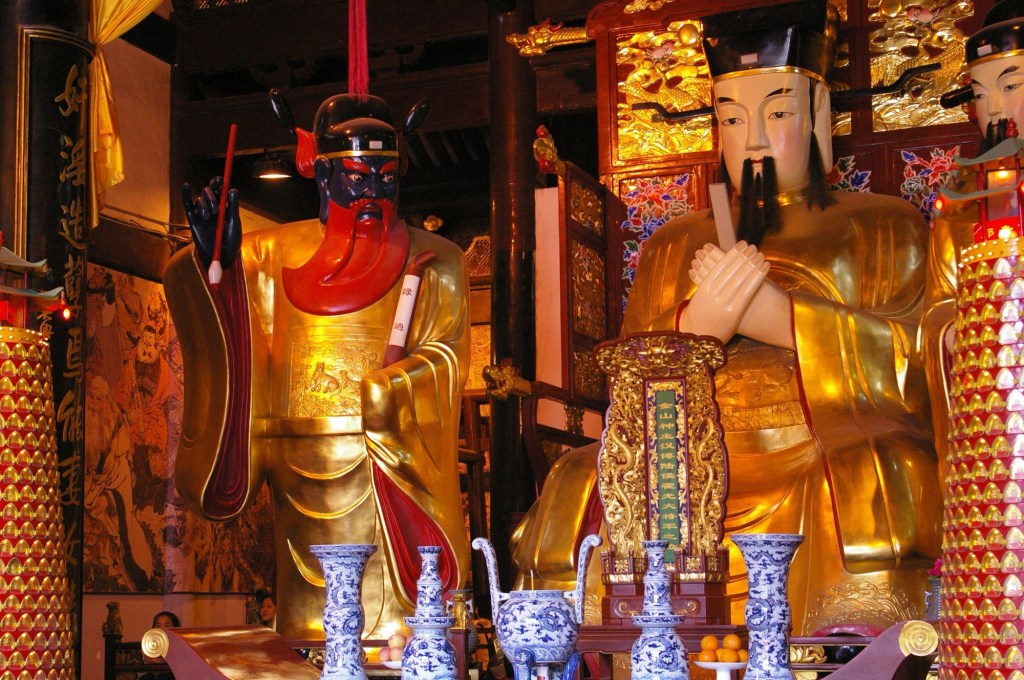
- The first story selected for the Manchu translation is《考城隍》, which literally means “passing an exam to become a City God” in Chinese. In Daoism, a City God (城隍) is a deity who guards a city. During the Ming and Qing dynasties, such deities were considered the magistrates of the underworld, corresponding to the bureaucratic institutions of the human world. However, more importantly, this story is one of filial piety. For the rulers of late imperial China, promoting filial piety served not only to reinforce the fundamental ethics of Confucianism but also to emphasize the close connection between “loyalty” and “filial piety.”《考城隍》is also the first story in the first volume of the Chinese version of Liaozhai Zhiyi.
- hoton i enduri ᡥᠣᠨᡨᠣᠨ ᡳ ᡝᠨᡩᡠᡵᡳ The term “City God” is directly translated as “the deity of the city,” which neutralizes the specific religious connotation—Daoism.
- simnerengge ᠰᡳᠮᠨᡝᡵᡝᠨᡤᡝ This is the GER form of the verb simnenembi=to go to take the exam (simnembi=to exam), shows “sb. of” or “sth. of”. So, the above translation “passing an exam to become a City God” is not accurate since the original Manchu title put great emphasis on the “sb.”. It should be translated as “The person going to take the City God exam”. However, the Chinese phrase “考城隍” does not explicitly include the word “person.” This indicates that the translator made adjustments based on the content of the entire text.
Please Refer to: A. R. Zito, “City Gods, Filiality, and Hegemony in Late Imperial China,” Modern China 13, no. 3 (July 1987)
Line 3
- In Manchu, efu ᡝᡶᡠ can refer to both a sister’s husband and a wife’s brother. The full meaning of this sentence is “my efu’s mafa (ancestor).” Therefore, if it refers to the ancestor of the narrator’s wife’s brother, it would be equivalent to the wife’s ancestor. Thus, in this context, it should be understood as “the ancestor of my sister’s husband.” “予姊丈之祖” The Chinese annotation in the Manchu version should be written as: 予姊夫之祖
- In the annotation, it says, “My sister’s husband, Duke Song, is named Tao焘” The character 焘 is a polyphonic character, pronounced either as dao or tao, but in personal names, it’s generally pronounced as tao. Interestingly, the Manchu language uses doo to approximate this pronunciation. P.S.: doo: 1. A dance 2. doo- (imperative of doombi) – 蹈 → see doombi.
- hiyan ᡥᡳᠶᠠᠨ 1. (Ch. 香) incense, perfume 2. (Ch. 縣 xiàn) county, district I wonder if it’s a coincidence, but “incense” also takes a linear (线xiàn) form.
- qaliyangga xusai ᠴᠠᠯᡳᠶᠠᠩᡤᠠ ᡧᡠᠰᠠᡳ 廪生(lin sheng) A term used during the Ming and Qing dynasties to refer to students who received government-provided silver and grain. qaliyan ᠴᠠᠯᡳᠶᠠᠨ itself means “money and grain.” For example: qaliyan sindambi means “to disburse pay,” and qaliyan gaijambi means “to collect land taxes.” xusai itself means “Licentiate秀才,” which refers to the first literary degree.
After taking a quick look, I noticed that the Manchu version primarily includes the R-13 selections. Some of the R-18 content was not included at all! 🔞
 Sijian Wang’s Academic Blog